Guest post by Swift Karting, an LO206 chassis and engine builder in Franklin, Indiana. If you’re still deciding whether to race at all, start with our guide to going from rental karts to racing.
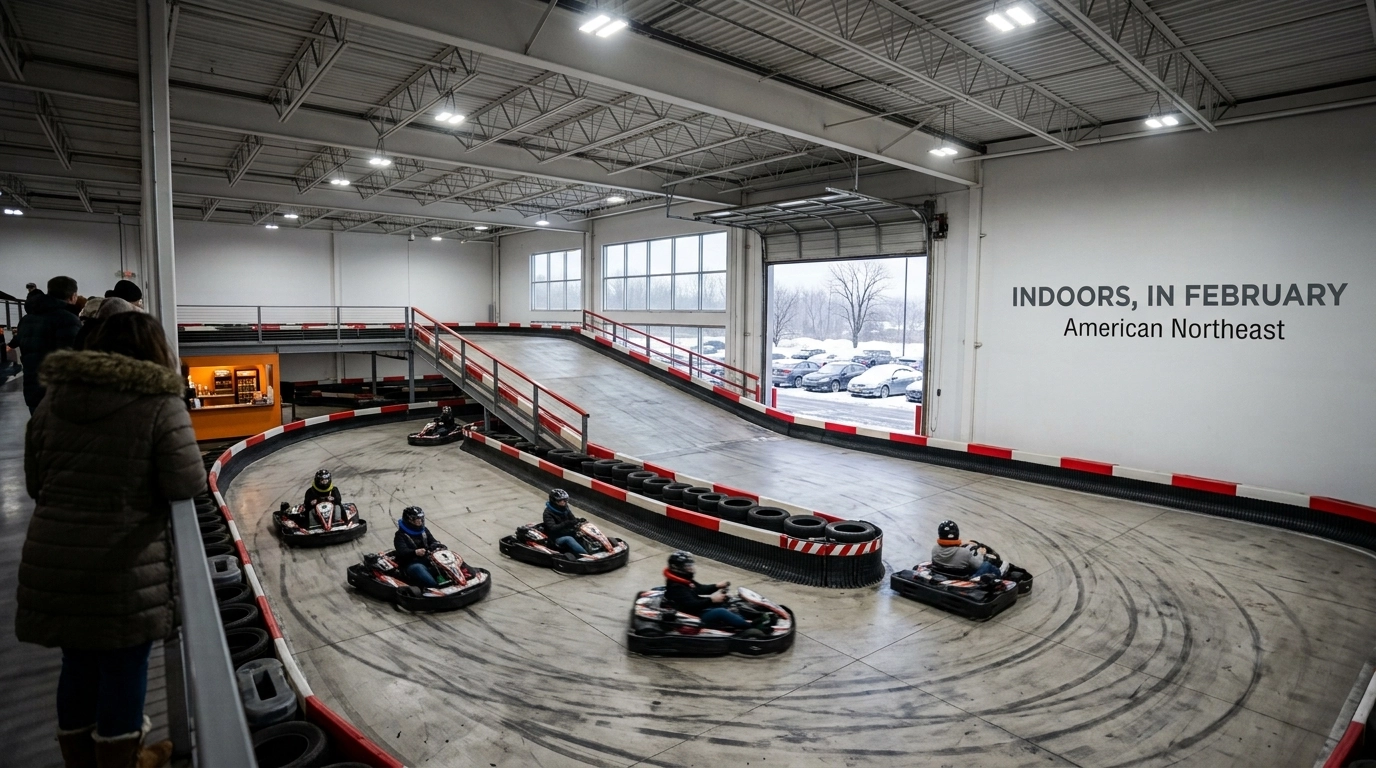
Arrive-and-drive answered the first question. You liked it. The clock made sense, and now you want to know what it takes to show up in your own kart.
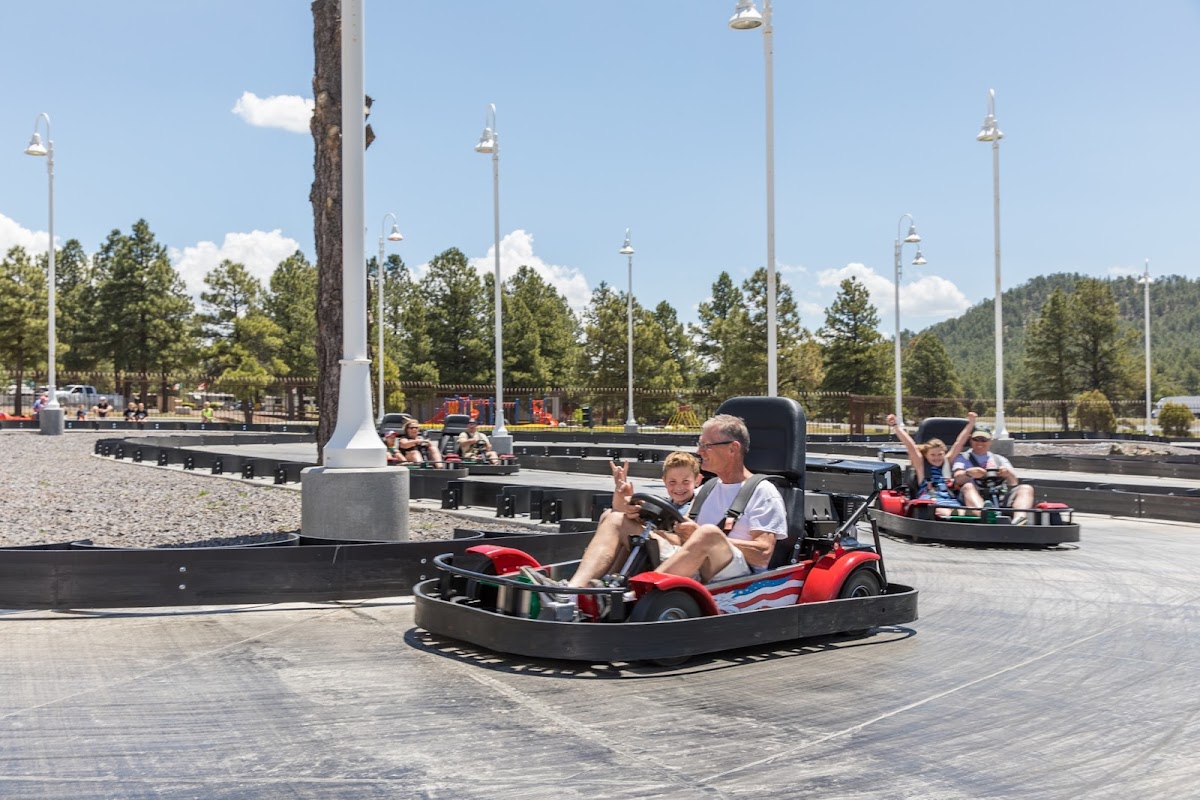
Owning one is a different sport than renting one. A rental kart is heavy, the seat is a compromise, and nobody expects you to change the oil at lunch. A race kart is light. You fit the seat. You pick the class. You are also the person who loads it, gets it through tech, and puts a bumper back on when it meets a tire stack.
That jump is smaller than it looks from the rental paddock. In most of the country the first real class is not a blank check and a two-stroke. It is a Briggs LO206 sprint kart: a 4-cycle chassis, a sealed engine, and a season of showing up.
Why LO206 is the right first class
LO206 is a sealed Briggs & Stratton crate. It is a 206 cc, low-compression, fixed-timing 4-cycle with a rev limiter a tech inspector can see. You do not build a secret motor in the garage to go club racing. Everyone starts from the same sealed engine, so the driver who hits marks beats the driver who bought the most expensive sticker.
That is why the racing stays close. At a normal club you will sit in a draft train, with gaps of a few tenths, not watch someone disappear by a second a lap. It is also why families stay. A cared-for LO206 is happy for hundreds of hours. The work around it is normal 4-cycle kart parts: a clutch, a mount, a pipe, a chain, and gears. Clubs across the United States already run the class, already have a spec tire, and already have someone who has bent the same bumper you are about to bend.
Cadet, junior, and senior are different weights on that same idea. A true kid kart is often a smaller engine and a smaller chassis. Moving into LO206 Junior at 11 is a real decision: the physical demand goes up, the kart has to fit, and plenty of kids get faster because they stop fighting a kart they have outgrown. Buy the class that driver will race this year, and confirm the age and weight rules with that club.
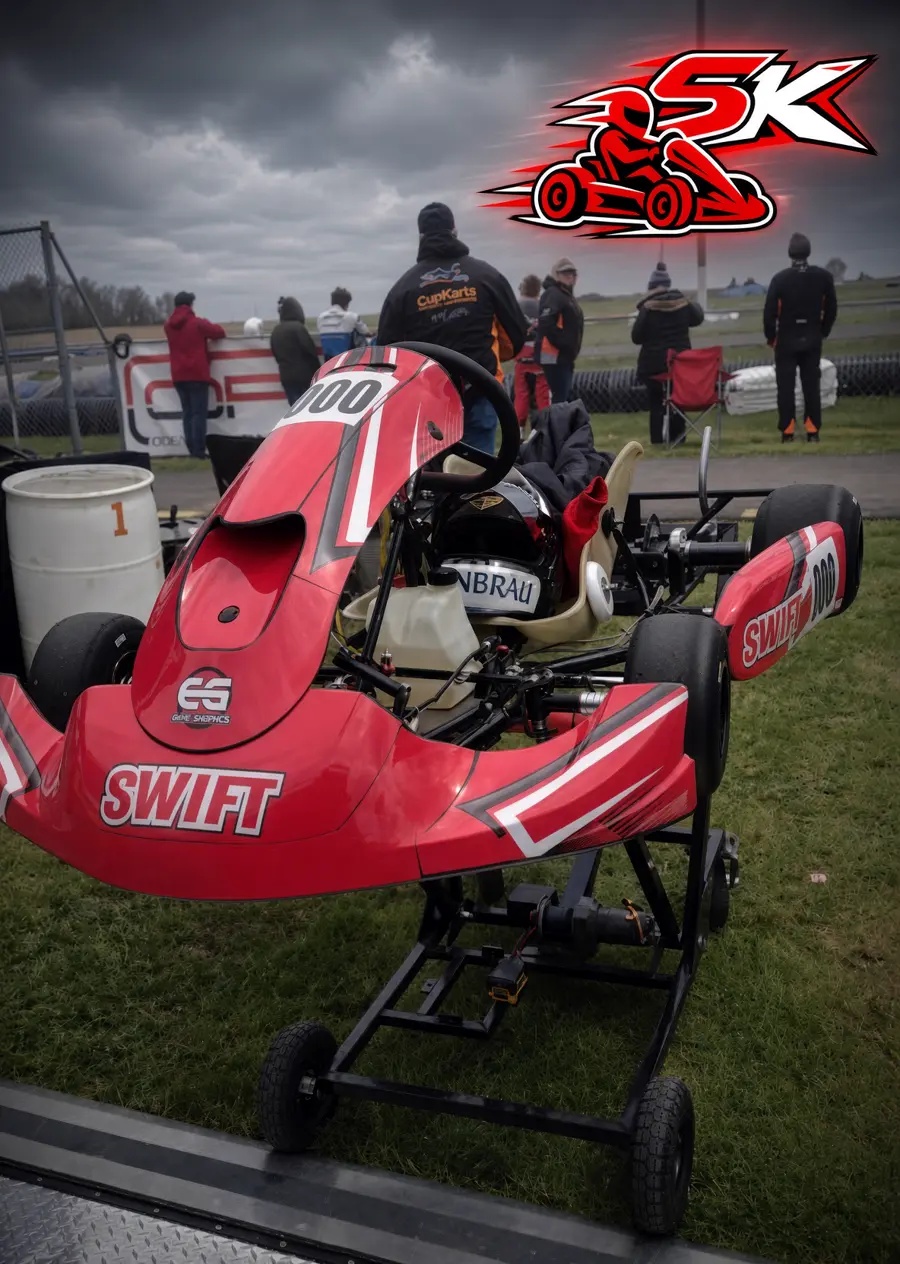
Photo: Swift Karting
What a starter setup actually costs
Treat it as three purchases, then the gear that keeps you legal.
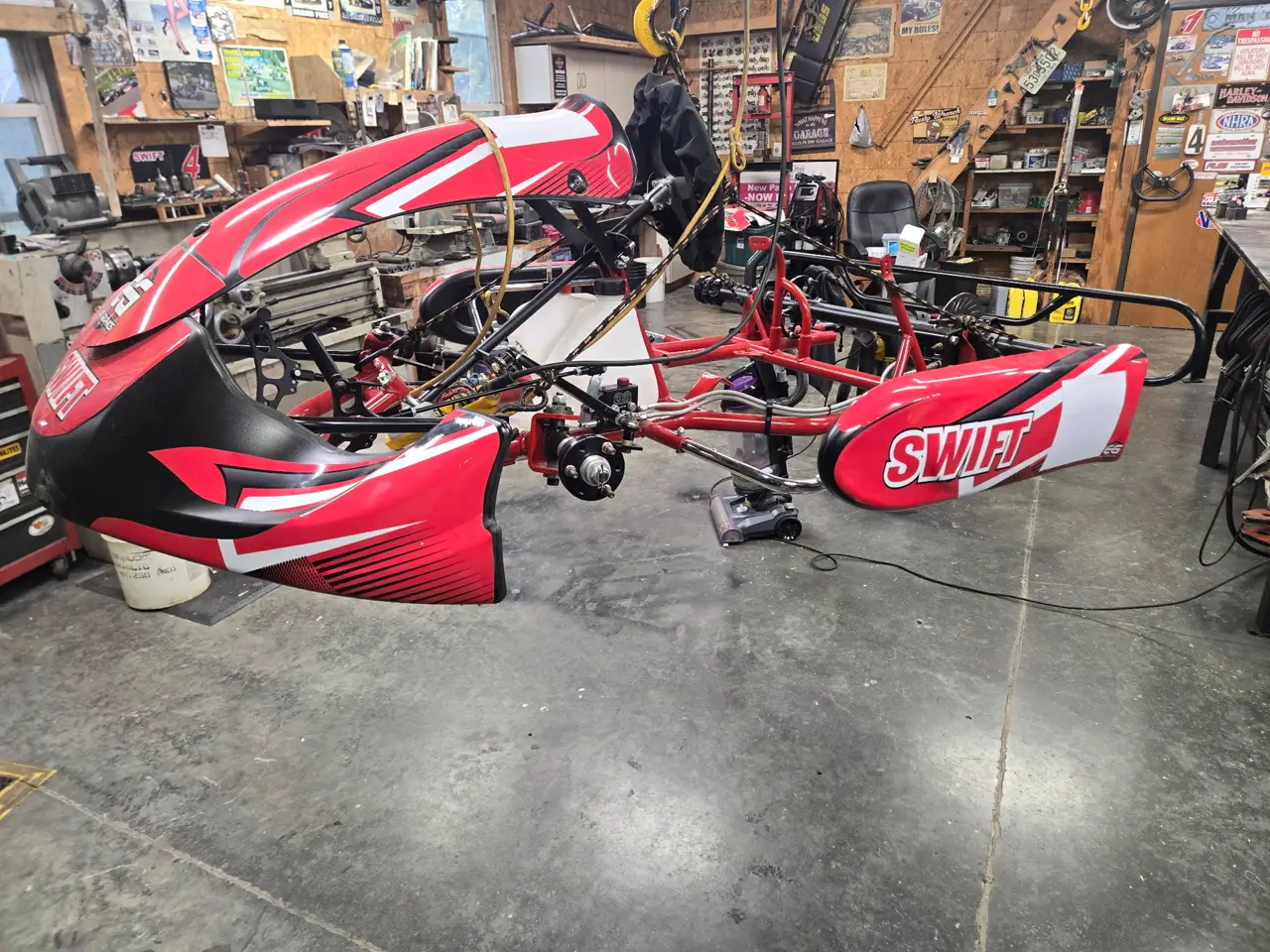
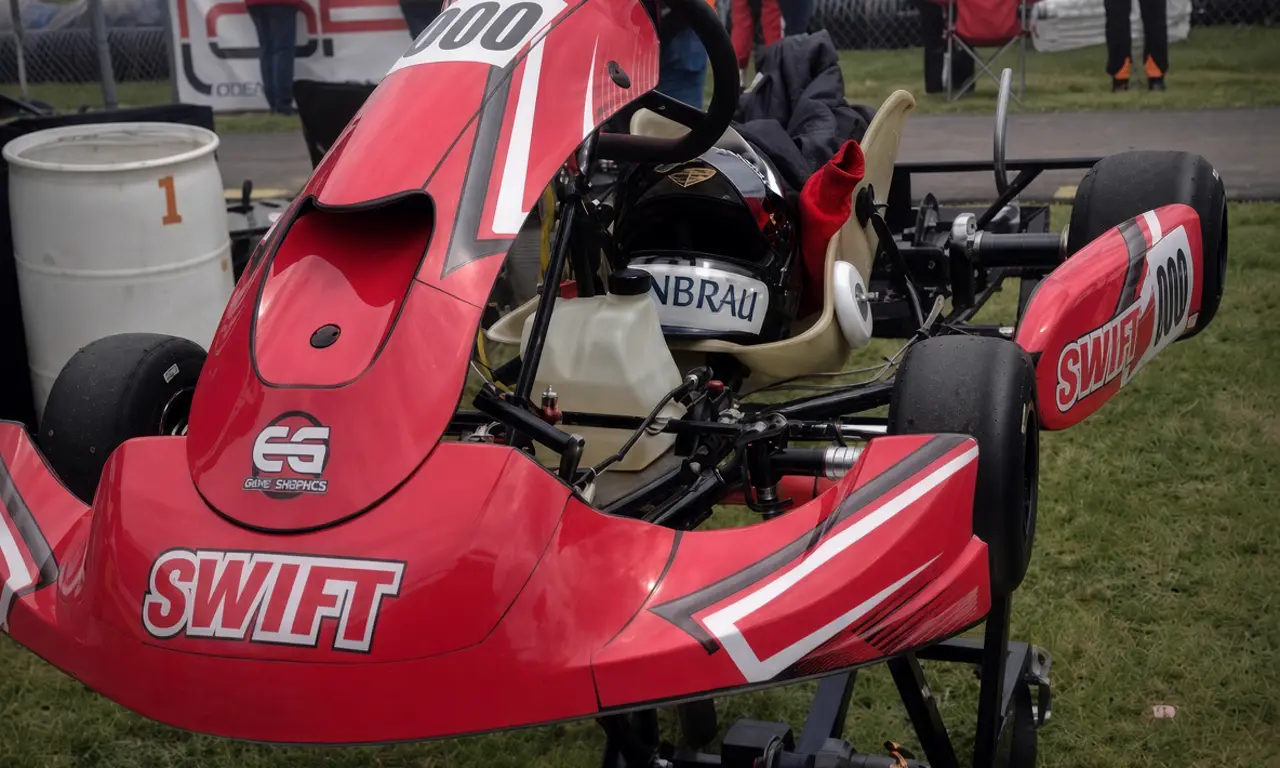
The roller. That is the kart without the engine: frame, brakes, axle, spindles, bodywork, and a seat. If you have never owned a sprint kart, a straight used roller is the smarter first chassis. You are going to scuff bodywork and probably bend something up front. What matters is a square frame and parts you can get on a Saturday. A new LO206 roller with the seat already in it, the Swift A-Flyer, is $3,850. It is welded and aligned in Franklin, Indiana, in Docol tubing, with a Martin brake and a 40mm or 50mm axle. It fits drivers from about 4 foot 10 to 6 foot, and about 110 to 220 pounds. Engine and tires are not in that price. That is what “roller” means. A bent used frame is not automatically scrap. Axles and chassis get straightened on a flat table, including other brands. Get the frame square before you spend money on horsepower.
The engine, first. Start with a box stock LO206. A new sealed crate runs about $740 to $900, depending on the version. It is race legal as it sits from Briggs. Club championships are still won on that crate. Budget it as an engine, not as a finished kart. You still need a clutch, a mount, a pipe, and a chain before it turns a wheel.
The 4-cycle parts that finish it. This is the list people skip when they memorize the roller price. A legal clutch, a rigid one-piece engine mount, the exhaust, chain, a couple of gears, and a set of the tire the class runs. The mount has to match the tube size on the frame. If the used kart is a VLR, a Coyote, a Tony Kart, or anything else that is still straight, keep it. Matching the brand on the nerf bar is optional. A mount that does not flex, and a chain that tracks the sprocket, are not.
Then the unglamorous money. A helmet, a suit or abrasion jacket your club accepts, gloves, and shoes. A way to haul the kart. A tire gauge, safety wire, and oil you will actually change. Lead, if the class minimum sits above the driver and the kart. None of that is inside the $3,850. Add it up before you decide the hobby costs “about four thousand.” (Go Karting USA’s starter cost breakdown prices a full entry-level gear set.)
What a race weekend looks like
You will not arrive, drive for ten minutes, and leave. A club day is a full day. Some rounds are two.
You get there early enough to unload, set pressures, and make tech. Someone looks at the engine seal, the fuel, the weight, and your safety gear. Practice is where you learn the track in your own seat, which will not understeer the way the rental did. A heat or a qualifying session sets the feature. The feature is where the draft and the corner exit matter, because nobody has a pile of extra horsepower on you.
Between sessions you are the mechanic, and the jobs are specific. Tire pressure is not one number. You set it cold, then read it hot, because the tire grows. Oil gets changed on a heavy day, not “when it looks dark.” The clutch has to engage where that track wants it, and that number is not the same at every club. Gear is a chart, not a guess. A spark plug you can read will tell you more than a new set of tires. The chain and sprocket are a maintenance item, not a decoration. Change one of those at a time.
Rules are local. Do not change a sealed part because a paddock conversation said it was fine. Ask the tech inspector at the track you are racing.
Chassis, clutch, oil, gear, tire pressure, chain, and what you are allowed to do to a sealed engine all live on the LO206 karting guides. Start with the page that matches the problem you have that Saturday.
Drive the box stock. Then ask for the last bit of horsepower.
This is the order that saves money.
Get laps. A lot of them. A sealed crate with fresh oil, a clutch that engages, and a driver who can repeat a corner will beat a built engine under a driver who is still hunting the brake marker. The frame has to be straight. The seat has to fit. The tire has to be the tire the class runs. If any of those are wrong, more horsepower will not show up on the clock.
When that work is done, and you have a real season of laps on the box stock, the engine is the last place to look. A built LO206 is the same sealed motor, measured and assembled so it is consistent. Box stock can be fast. A built motor is that same process done on purpose: valve sealing, a carb that behaves the same way every session, a cam chosen inside the rulebook for your class and weight, and assembly you can repeat. On track that shows up as a few tenths of a second. In this class, a few tenths is the race.
That package is a performance-built LO206. The blueprinted engine is $1,275. You pick the class, then the pieces that make it bolt on: exhaust, motor mount, and break-in oil. The clutch is still its own part, same as it is on a crate. It is the step you take after the crate has taught you the class. It is a bad way to skip learning it.
If the crate feels lazy before those laps exist, start in the guides. Oil capacity, a carb that surges or pops on decel, a clutch engagement that does not match the track, and a plug that says the mixture is off will all imitate a slow motor. Fix those first.
You do not need a national team to start. You need a club track that runs LO206, a roller you can keep square, a sealed crate, and the 4-cycle parts that connect them. Drive that until the laps feel repeatable. The last bit of horsepower can wait until you are fast enough to use it.
About the Author
Swift Karting (MC Engines) builds LO206 chassis and legal LO206 engine packages in Franklin, Indiana, and ships nationwide. Setup notes for clutch, oil, gear, tires, and legal engine work are at swiftkarting.com/pages/lo206-karting-guides.