If you’ve done a few rental sessions and started checking your lap times on the drive home, you already know the feeling. At some point the question stops being “where can I go karting this weekend?” and becomes “what would it take to race for real?”
The good news is that club karting in the US is more accessible than most people expect. You don’t need a racing background, a big truck or a sponsor. You need a kart, some safety gear, a club track within driving distance and the patience to be slow for your first few race days. This guide covers what that actually looks like.
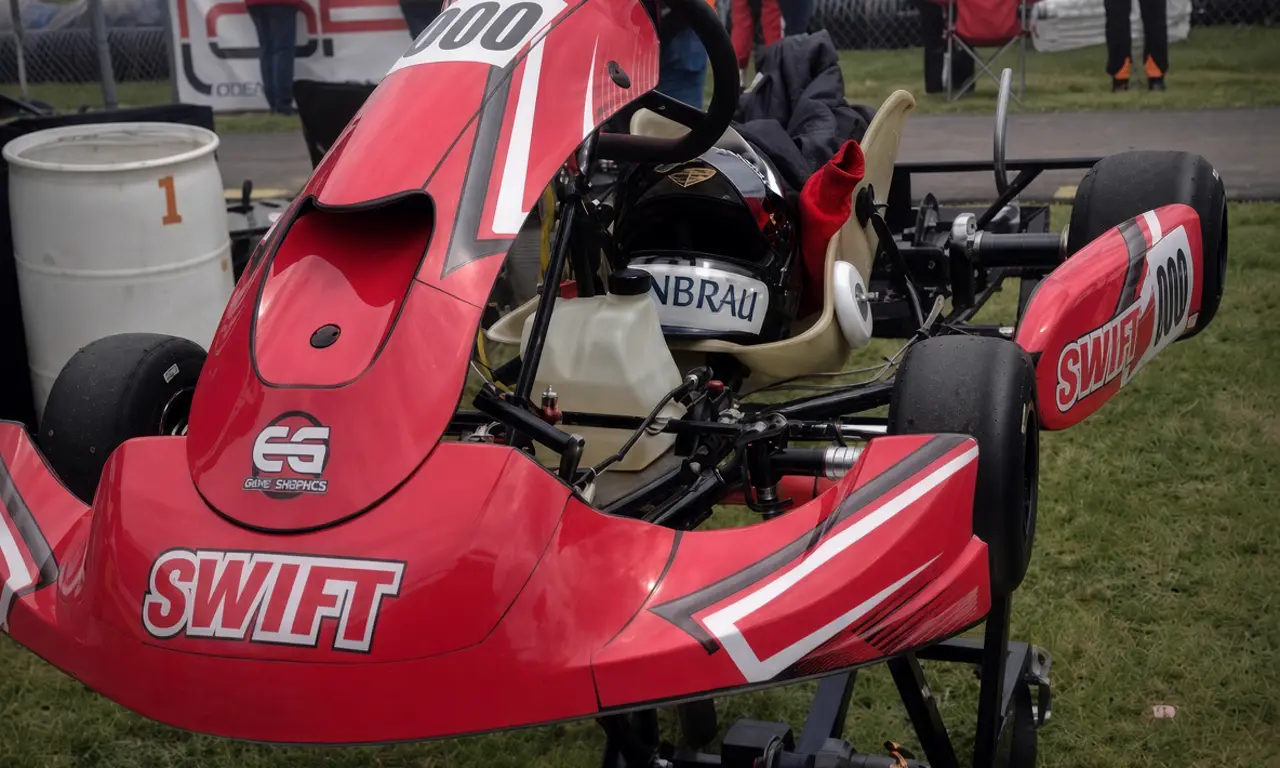
Cover photo: a Swift A-Flyer LO206 kart, courtesy of Swift Karting.
First, Be Sure You’re Hooked
Before you spend thousands of dollars, spend a few hundred testing the idea. Run rental sessions at more than one track, and if you can, try an arrive-and-drive program, where a track or team provides a race kart for the day. Arrive-and-drive karts are much closer to what club racers drive than a rental, and a day in one will tell you more than a month of shopping online.
Our friends at Swift Karting in Indiana put together a practical guide on where to practise before you buy a kart, and it’s worth reading before you spend anything. When you’re ready to look for tracks near you, start with our full US track directory.
Rental Karts vs Race Karts
The biggest shock for rental drivers is how different a race kart feels. Rental karts are built to survive thousands of laps with drivers who have never been in a kart before. They’re heavy, they have bumpers all around, and they’re often speed-limited.
A club race kart is a different machine. It is much lighter, with no suspension beyond the flex of the chassis, sticky tires and very direct steering. It’s not wildly faster in a straight line than a good rental, but it brakes later, turns in harder and punishes sloppy inputs. It’s also more physical. Your neck, ribs and forearms will let you know after your first full practice day.
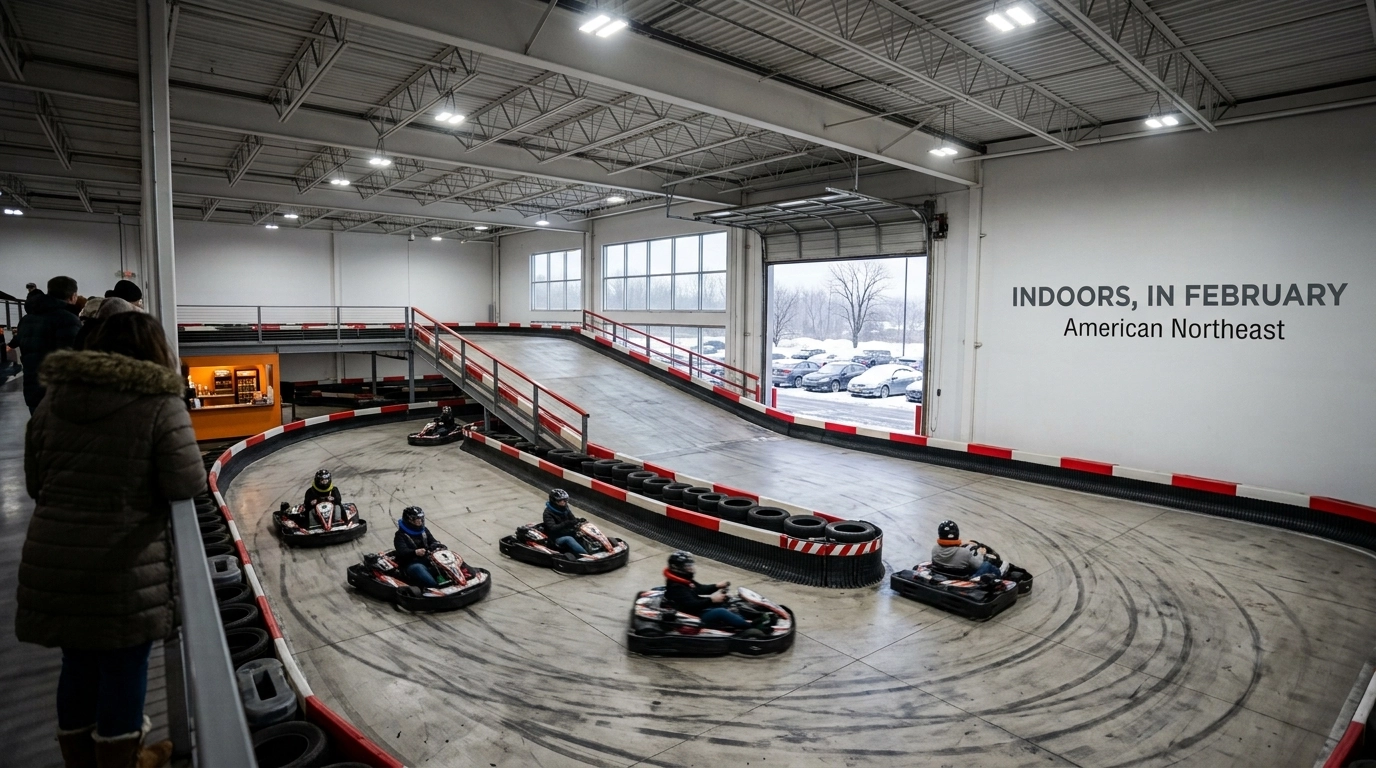
If you’ve been wondering whether indoor electric or outdoor karting is closer to the real thing, our indoor vs outdoor guide covers the differences. Club racing almost always happens outdoors.
Why LO206 Is the Usual First Class
Walk into almost any US club paddock and you’ll find a Briggs & Stratton LO206 class. It has become the default starting point for new racers for a few good reasons.
- The engine is sealed. LO206 engines leave the factory with seals on them, and clubs check those seals at tech inspection. Nobody can buy a big advantage by modifying the engine, so the racing comes down to the driver and the setup.
- It’s cheap to run. The engine is designed to go a long time between rebuilds, and it runs on pump gas.
- One engine covers every age. Clubs run LO206 for cadets, juniors, seniors and masters, with different minimum weights and throttle restrictors for each class. A family can race the same engine type across generations.
- The grids are full. Because so many people race it, you’ll have people to race against, used parts to buy and people who can help you in the paddock.
Other four-stroke classes and two-stroke classes like X30, Rotax and KA100 are faster and great fun, but they cost more to buy and run. Most people are glad they learned in LO206 first. For a race shop’s view of what running LO206 actually involves, from the roller to race-day maintenance, read Swift Karting’s guest post on your first LO206 season.
If you’re a parent weighing up the move from cadet to LO206 junior, Swift Karting’s guide to moving up to LO206 Junior is a thoughtful read on timing and readiness.
What a Starter Setup Costs
To keep these numbers honest, we priced a real starter setup from the online store of Swift Karting, an LO206 engine builder and kart shop in Franklin, Indiana. Prices are as listed in September 2026 and will move a little over time, but they give you a realistic picture.
The kart, bought new. A new rolling chassis (a complete kart minus engine and tires) runs about $3,850 for Swift’s American-built A-Flyer, which comes with the seat, brakes, wheels and bodywork already fitted. A new, sealed Briggs LO206 engine is about $900, a clutch about $160 to $200, and a set of four sprint tires around $320. That puts a new, race-ready kart at roughly $5,000 to $5,500.
The kart, bought used. A used kart can cost a lot less, but prices swing so much with age and condition that there’s no reliable average. What matters more than the price is a straight frame, intact engine seals and a known engine history. More on that below.
Safety gear. Here is what a solid entry-level set costs from the same store:
| Item | Entry-level price |
|---|---|
| Snell SA2025 helmet | about $375 |
| Karting suit | about $155 |
| Karting gloves | about $40 |
| Driving shoes | about $200 |
| Rib protector | about $150 |
| Neck collar | about $35 |
| Total | about $955 |
Stepping up to a dedicated Snell K2025 karting helmet, an FIA-rated suit and a proper neck support takes that closer to $1,750. Your helmet is the one item where you should never cut corners, and our guide to buying your first go-kart helmet explains what the ratings mean. Check your club’s rulebook before you buy, as some require specific ratings.
Support equipment. A kart stand, a basic tool kit, a tire pressure gauge, fuel cans, lead weight to reach your class minimum and some way to move the kart. Many people start with a small utility trailer or the back of a pickup. Plan on a few hundred dollars here, more if you need a trailer.
Season running costs. This is where the budget really goes. Club memberships, race entries, practice day fees, tires, fuel, oil and replacement parts add up quickly. At around $80 a tire, a fresh set of sprint tires costs about $320, and a competitive set doesn’t last many races. Ask your local club what a typical season costs its members, as regulars will give you an honest number.
All in, going new with entry-level gear puts you on the grid for about $6,000 to $6,500, and a good used kart can bring that down considerably. It’s more than a night of rental races, but a lot less than most people assume “racing” costs. If you want to compare it against rental prices first, our breakdown of how much go-karting costs has the numbers for arrive-and-drive venues.
Choosing the Chassis
New racers tend to obsess over which chassis brand is fastest. In LO206, it matters much less than you’d think. The engine doesn’t make enough power, and the tires aren’t grippy enough, for the chassis badge to decide who wins.
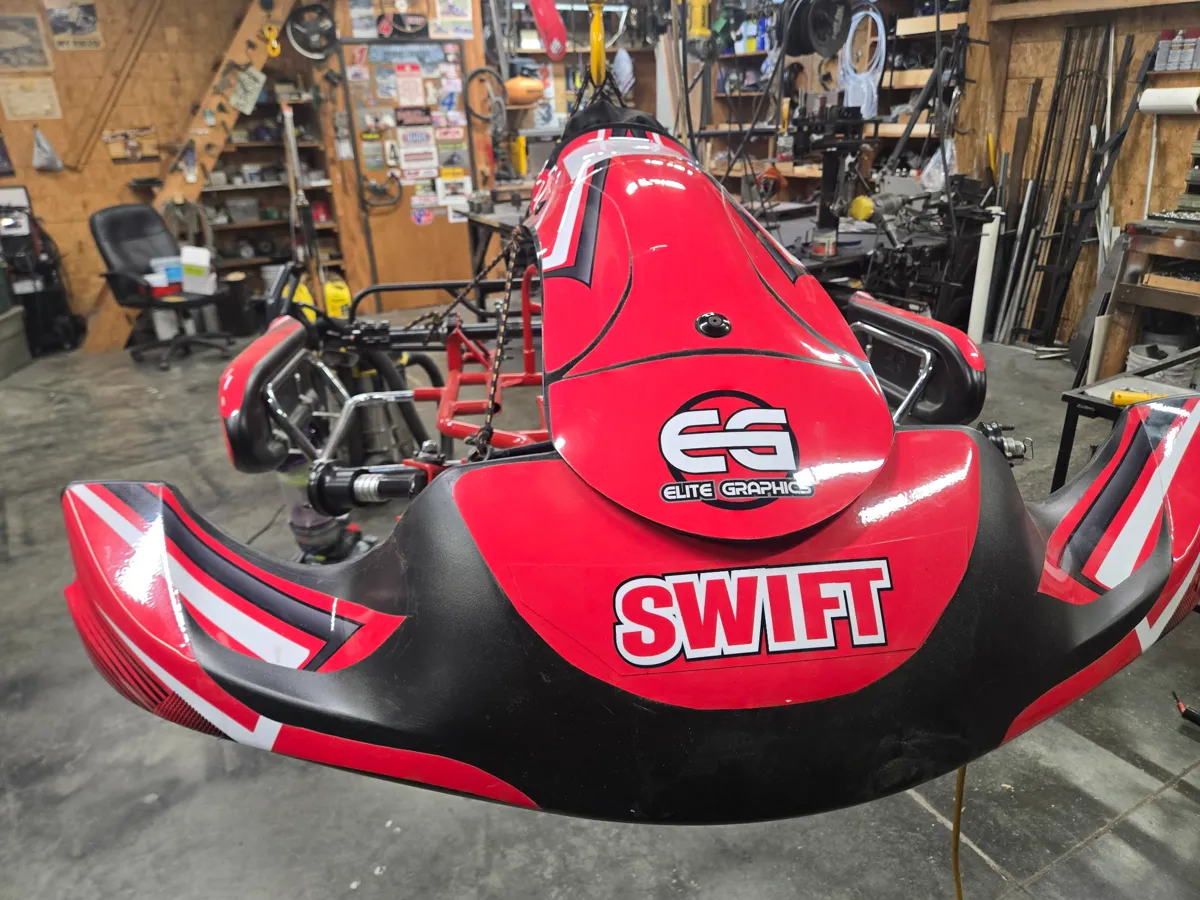
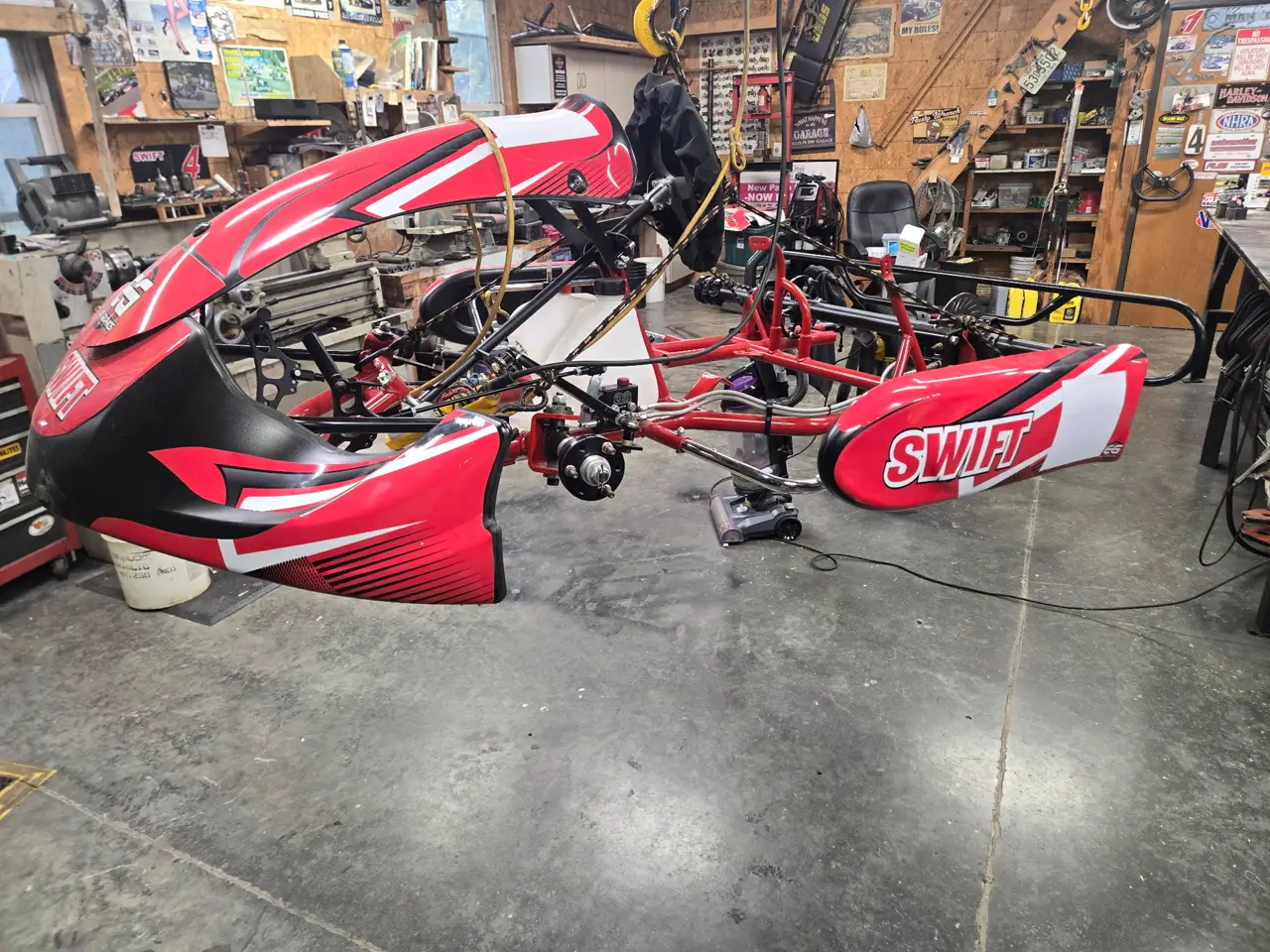
Photo: Swift Karting
What matters more is support. If the shop at your local track stocks spindles, axles and setup advice for one brand, that brand will make you faster than a better-looking kart with no local help. Swift Karting explains this well in their guide to what actually matters when you buy an LO206 chassis, and it’s the best buying advice we’ve seen for a first kart.
A few things to check on any used kart:
- The frame is straight. Ask a local shop to check it on a flat surface. A bent chassis will never handle properly.
- The engine seals are intact and the engine has a known history.
- The seat fits you. A seat that’s too big will move you around and hurt your ribs.
- Parts are easy to find locally, or online from a karting parts supplier.
What a Race Weekend Looks Like
Club race days follow a similar pattern across the country, although every club runs things a little differently.
- Arrive early and unload. Paddock spots fill up quickly, and you’ll want time to set up your pit.
- Registration and tech. You’ll sign in, pay your entry fee and have your kart and safety gear checked. In LO206, tech includes checking your engine seals.
- Practice. A few short sessions to learn the track conditions and check your setup.
- Qualifying. A timed session that sets your starting position.
- Heat races. Short races that usually set the grid for the main event.
- The feature. The main race of the day.
- The scales. After every on-track session, you and the kart go over the scales to prove you meet the class minimum weight. Being underweight gets you disqualified, so learn where to bolt on lead.
The atmosphere is usually friendly, especially toward rookies. Ask questions, watch what the fast drivers do, and don’t be embarrassed about being at the back. Everyone was, once.
How to Get Started
- Find your nearest club track. Start with our US track directory and look for outdoor circuits that run club races, not just rental sessions. If you’re in the Midwest, our Indiana track listings are a good example of what’s out there.
- Visit on a race day as a spectator. Walk the paddock, talk to racers and ask who sells karts and parts locally.
- Buy a used kart from someone local who can show you how it works.
- Do a few practice days before your first race.
- Enter your first race with no goal other than finishing and learning.
Going from rental karts to your own kart is one of the most rewarding steps in motorsport. The first race day is nerve-racking, the second is easier, and by the end of your first season you’ll wonder why you waited so long.